Inspection
What We Found When a Toy Hauler's Safety Devices Had Been Disabled
By Brad Tomlin · June 8, 2026
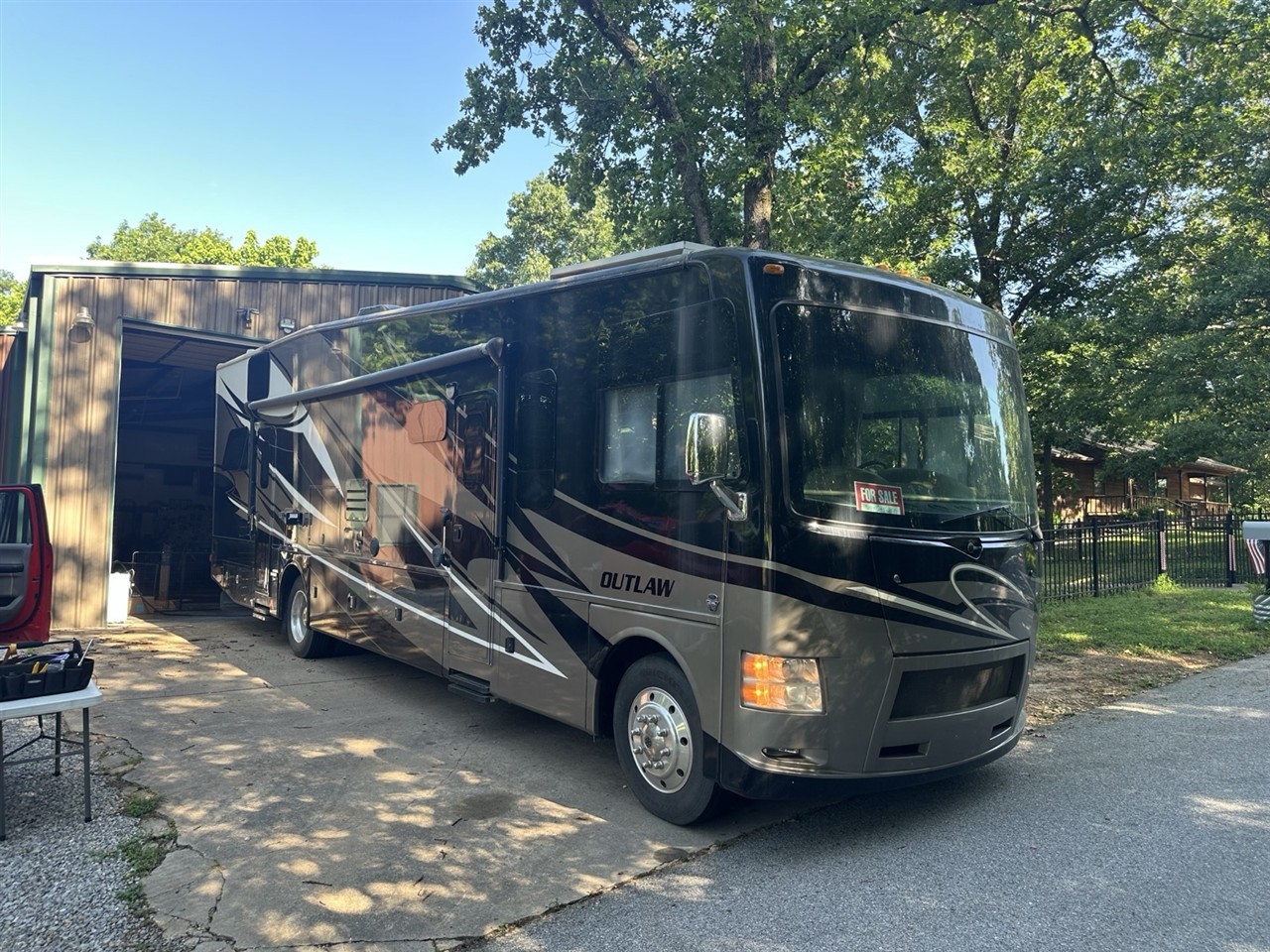
Some of the most interesting inspections aren't on brand-new units. They're on rigs that have clearly been loved, lived in, and modified by an owner who knew their way around a toolbox. That's usually a good sign. Sometimes, it also means a previous fix went in the wrong direction entirely.
The wire that had been cut
During the life-safety check, we found the combination propane (LP) / carbon monoxide detector had been intentionally disabled, its wire cut to stop it from operating. On top of that, the LP system failed its leak test at the cooktop burner, a propane smell was noticeable near the refrigerator along with a flashing gas-check light, and the separate smoke/CO detector was past its life-expectancy date and wasn't even an RV-rated unit. Four different life-safety systems, all pointing the same direction: the propane and detection setup on this unit needed a qualified technician before anyone spent a night in it.
None of that shows up on a test drive. It shows up when someone actually runs the leak test and opens up the detector housing.
Tires don't get a pass either
Nearly every wheel position on this rig had a tire past its DOT service-life date, and pressure was down more than 10 psi below spec on top of that, a combination that's a straightforward life-safety flag on its own, tow vehicle aside. It's an easy thing to miss on a walkthrough, since a tire can look fine sitting still and still be well past the point it should be trusted at highway speed.
A well-loved, heavily modified rig
This owner had clearly put real work into the unit: solar panels, a lithium battery upgrade, and a compost toilet swapped in for the factory setup. Good upgrades, competently installed ones even, but modifications like these change how a unit needs to be evaluated. The on-board water system had also been modified, the city water connection required an adapter hose to use, and the modified systems needed their own separate check to confirm everything was actually working as intended rather than just assumed to be.
Beyond that, we found the usual list a well-used rig accumulates: a possible small tear in the roof membrane, both the main and garage entry step motors no longer working (each held up with a pin instead), a door strut that had come loose, a rear awning that wouldn't open with its manual crank, an oily spot near a leveler's hydraulic connection, a wet spot on the rear axle differential, an engine dipstick too charred to get a clean oil reading from, and a water heater drain leaking into its compartment.
Why this matters
A rig with a lot of thoughtful upgrades can still hide one that wasn't done right, or one safety device someone disabled on purpose and never mentioned to the next owner. That's exactly the gap a certified inspection is built to close. Every inspection we perform follows NRVIA's Code of Ethics and Standards of Practice, so what you get is a documented account of what's actually there, modifications included, not a guess based on how clean the rig looks.
Buying a modified or well-used RV? Book an inspection before you commit, and know exactly what you're taking on.